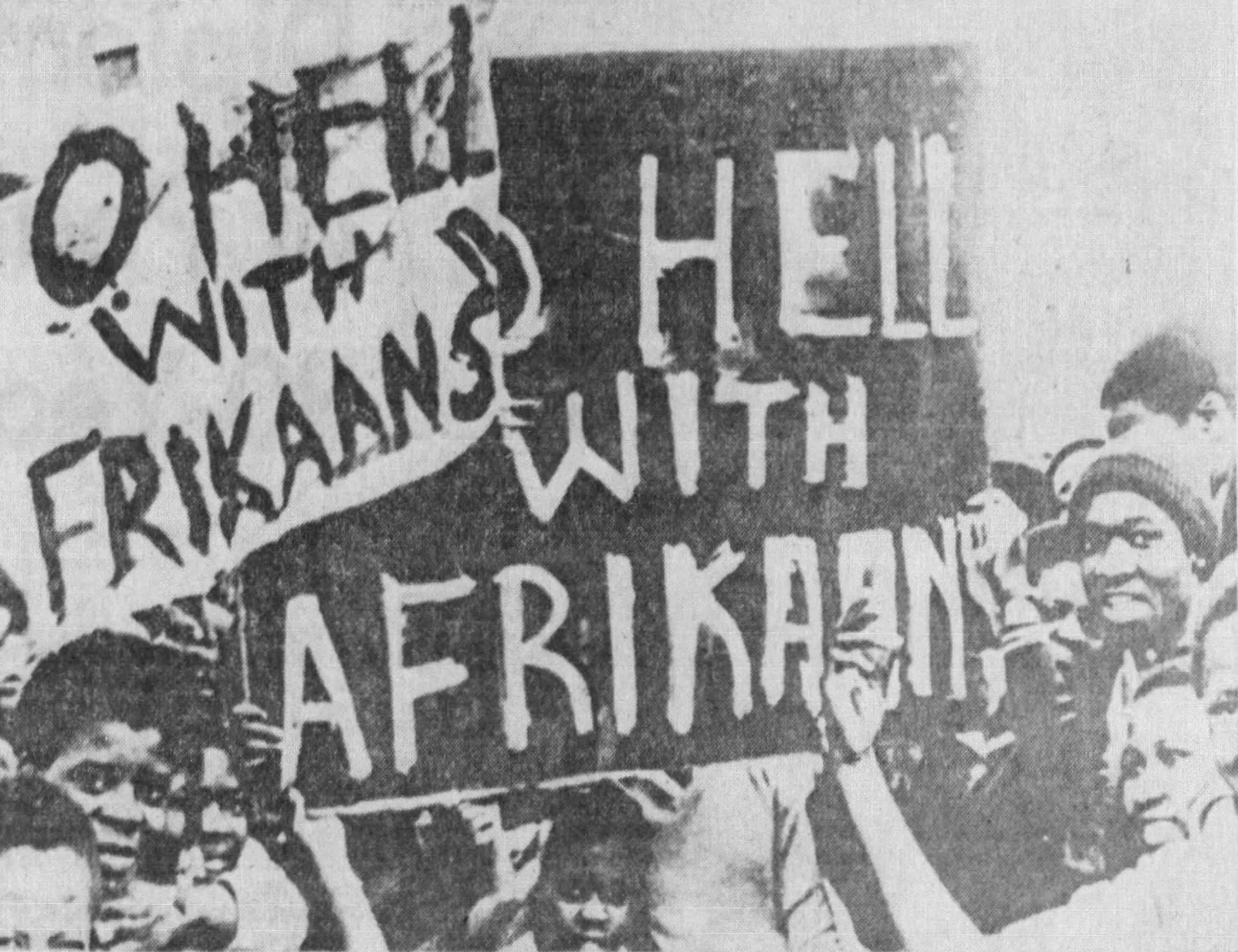
On June 16 1976 in apartheid South Africa 10,000 schoolchildren walked out of schools in Soweto heading to Orlando Stadium for a rally protesting the new law replacing teaching in English with Afrikaans. The move to “the language of the oppressor,” which neither black students or teachers spoke fluently, if at all, doomed their education’s future level.
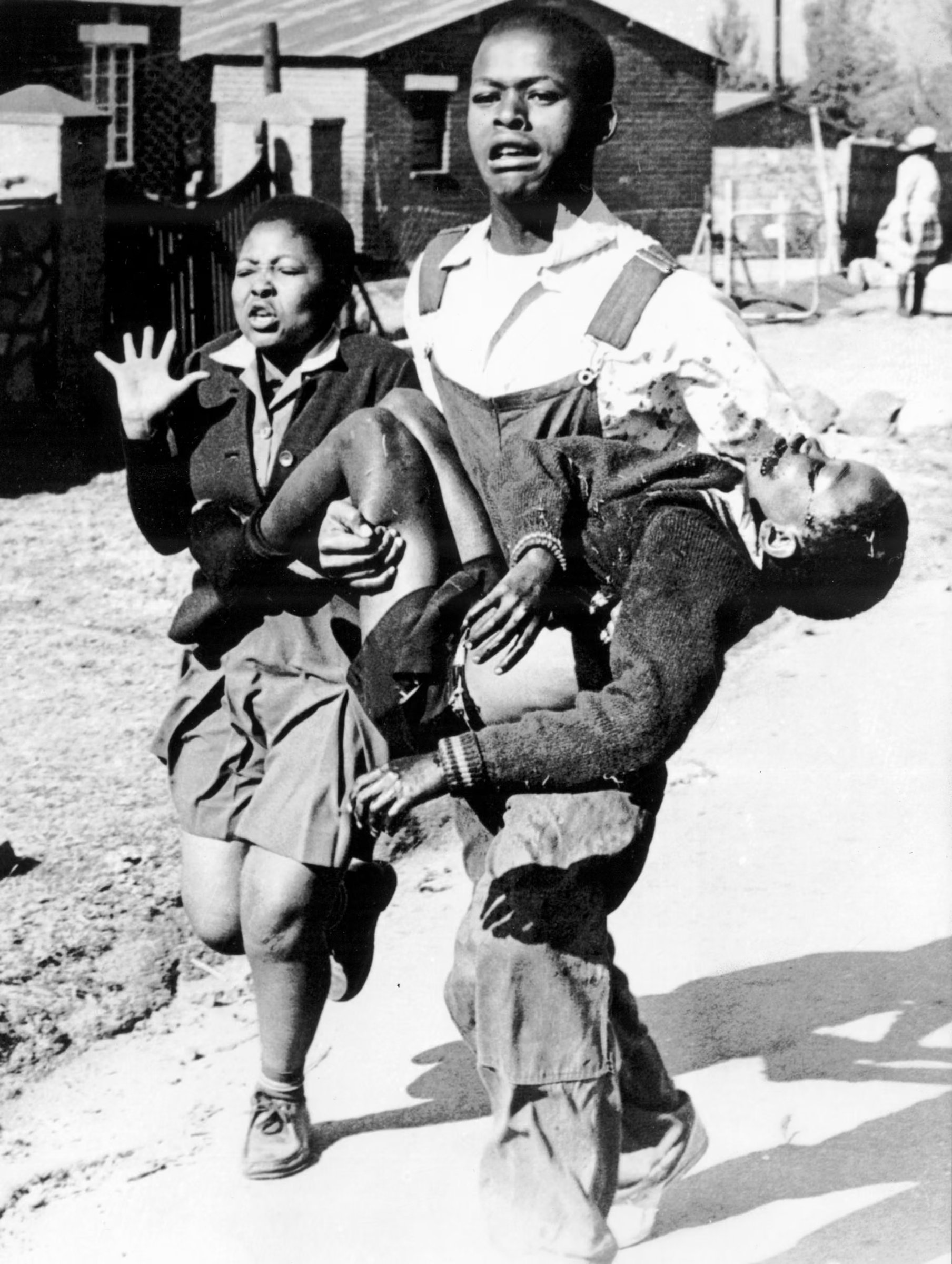
A brutal police attack in response, with batons, teargas and live ammunition, killed 176 children in Soweto, with uncounted hundreds wounded that day, and ignited months of rebellion across South Africa with hundreds more killed by police. The photograph by Sam Nzima of dying 12 year old Hector Pieterson, carried by distraught Mbuyisa Makhubo and his Hector’s sister, Antoinette, running from police, became the symbol of the rebellion seen across the world. June 16 is a public holiday in South Africa, known internationally as The Day of the African Child.
Ronnie Kasrils joined the liberation movement at the age of 21, in response to the 1960 Sharpeville massacre by the police killing 69 people, and he became active in sabotage actions by the ANC underground in Durban. He was a founding member of MK, the ANC’s military wing, was trained in the Soviet Union, was in action in Angola, Mozambique and Swaziland from the late 1970s and became Head of Intelligence in 1983.
He was in the ANC’s National Executive Committee and the Central Committee of the South African Communist Party. After the overthrow of apartheid he headed three ministries, including Defence and Intelligence. He is the author of several books on the the struggle for South Africa’s freedom from apartheid, and has witnessed up close the price paid by so many heroic unknown people.
Victoria Brittain: Let’s start with where you were and how you heard about the Soweto massacre of school children. What was your first thought and who did you want to talk to first?
Ronnie Kasrils: I was in London, in a Hampstead pub, debriefing a comrade from South Africa. He was reporting that things were buzzing back home. Unbelievably, the TV news came through about the rebellion, and that the Apartheid police had opened fire, resulting in a score or so of school children killed and injured, in the initial police response. Naturally this elevated our discussion ten-fold. Our initial concern was about the likely level of police response.
Immediately the conversation honed in on the extent of the resistance and likelihood of it spreading. I rushed to discuss with Joe Slovo and Yusuf Dadoo who I served under. They were glued to the BBC World Service which had more thorough updates of that day’s events. They were as anxious and elated as I was. I distinctly recall the feeling that a dramatic turning point back home was underway, and that my life was bound to change again.
The ferment affected all Soweto, young and old, students and workers. It spread across the country, drawing in entire communities, particularly in Johannesburg, in Cape Town where many were killed, and many in the Cape among the so-called Coloured or mixed-race youth.
To underline the point that the uprising was not confined to school students, I want to point out that state pathologist reports show that in the two months following the 16 June killings, over 50 per cent of those killed were over 20 years old, and 20 per cent over 30. In that period three protest strikes took place. (Statement of the SACP, April 1977, African Communist, No. 70). The International Defence and Aid Fund (IDAF) calculated 619 were slaughtered between June 16 to the end of 1976.
Victoria Brittain: Were you then expecting this level of resistance from the school children to the law enforcing teaching only in Afrikaans?
Ronnie Kasrils: When something as dramatic as this happens, one is stunned by the magnitude, but in fact there had been signs of mounting challenges to apartheid rule. We had had reports from our underground structures of mounting resentment by high school students of that new law the previous year enforcing the Afrikaans language in black schools. It was clearly an ideological tool for submission – part of the Bantu Education policy designed to train Africans for inferiority and servitude. The English language was considered too liberal.
Along with other manifestations of protest, the demonstration of June 16 was called by a barely noticed South African Schools Movement (SASM), which had emerged to campaign against the Bantu Education Act. This national organisation had emerged alongside the Black Consciousness Movement (BCM) popular among university students. The South African Students Organisation (SASO) too was formed in this environment of growing worker protests, including a militant strike wave in 1973. A radical group of students provided important research for the workers. The increase in strikes reflected the worsening economic conditions of the black population. An economic slump was underway following a boom in the late 1960s, with a rise in inflation particularly affecting black households, linked to the constraints of the apartheid system, a fall in the price of gold, and the rising defence budget.
A key factor was the collapse of Portuguese colonialism in 1974, and the huge significance of the liberation of Mozambique and Angola in 1975. Imagine then the rise in courage and anticipation that liberation was coming to South Africa, and the impact on those suffering oppression. In response, violent repression by the state intensified. The shooting of protesting strikers, and deaths in police custody, heightened the expectations of state violence. In fact, this was an everyday reality and underlines the courage it took to confront the police and the military.
Then came the forced retreat of the South African Defence Force (SADF) from Angola in January 1976, after Cuban forces had come to Angola’s assistance, following the Apartheid regime’s invasion the previous year, (supported by Washington) to prevent the MPLA coming to power. We all had dramatically heightened expectations that change was coming.
The signs were there that the apartheid system would be challenged by the black workers and masses, and in the liberation movement we always had an optimistic outlook. But to be frank, I can’t say that the catalyst for a turning point at the level of high school students could have been forecast. The expectation of state violence was another matter. In a racist, settler colonialism system, such as apartheid, extreme state terror over the indigenous people supported by a fearful settler community, was always the norm, and we certainly were not naïve about that. This is exactly why armed struggle for change had been adopted at the time of the Sharpeville massacre of 1960. Soweto in 1976 demolished the myth that the apartheid security forces were able to destroy the people’s fighting spirit.
Victoria Brittain: Looking back now, how do you assess that 1976 moment as a key marker in the long struggle to end apartheid. Where does it rank with, for instance, Kliptown and the Freedom Charter in 1955; Sharpeville in 1960; the Rivonia trial 1963/64; the Morogoro conference in Tanzania and the launch of Revolutionary People’s War by MK 1969?
Ronnie Kasrils: You certainly cite key inflexion points that have transformed and shaped South Africa’s history, both policy highlights and contextualised events, advances and setbacks, of enormous significance. Each one of these examples ushered in a new period in the national liberation struggle against white domination.
The Freedom Charter, based on grass roots demands and mobilisation, reflected the aspirations of an oppressed people for a non-racist, democratic country and is the root of our democratic Constitution. The Sharpeville massacre marked the parting from non-violent struggle and the turn to armed methods. The Rivonia arrests, trial and imprisonment of the Mandela leadership, aimed to smash the liberation movement, but saw its survival and recovery from exile. The strategy and tactics of the Morogoro Conference began the long process of that recovery, but faced enormous difficulties, particularly being far from the country and the people, and with an organised internal presence that had been crushed.
It was the Soweto Uprising which spread throughout the country, first as a student rebellion, but soon drawing in the involvement of the broader masses, particularly the working class and trade union movement, minority groups, grass roots communities and faith-based entities, providing the social forces of the People’s War that the Morogoro strategy articulated, but failed to implement in the pre-Soweto period.
The immediate aftermath of the Soweto events was a flood of recruits, hundreds and then thousands, of overwhelmingly young people, primarily black African, but including mixed race and those of Indian descent, as well as some white youth, joining uMkhonto weSizwe (MK was the ANC’s armed wing, jointly formed in 1961 by the ANC and SACP).(PSE NOTE this spelling of the name is Correct!) This coincided with the favourable conditions of Angolan and Mozambican independence, and the provisions of vital training bases in Angola, and further afield in the socialist countries. One cannot underestimate what this meant in terms of revitalising MK and enabling the ANC to enter the rising people’s struggle within the country, with trained military-political cadres and organisers.
It is relevant to stress that it was heroic military operations, albeit at a low level of capacity, in unfavourable circumstances, which contributed to and reinforced what developed into an almost insurrectionary mass uprising. It was that political factor, the masses, united and politically led, inspired by armed actions, that was our primary strength, reinforced by armed struggle, a growing underground network and international solidarity – what we called The Four Pillars of Struggle. This dialectical interconnection forced the apartheid regime into negotiations at the insistence of big business and the Western powers. They feared a Red Revolution.
In retrospect then, I would assess what you refer to as “ the 1976 moment,” not only as a key marker in the long struggle to end apartheid, but as a main turning point at the time. I qualify that, as I said, with the fortuitous fact that it coincided with the liberation of our neighbouring countries, Angola and Mozambique.
That opened the way for the surge of the internal struggle reinforced by regional and international events. Bear in mind that 1975 saw the victory of the Vietnamese over US Imperialism; 1980 the independence of Zimbabwe; 1987-88 the victory of Cuban-Angolan forces over the Apartheid forces at Cuito Cuanavale; the subsequent independence of Namibia in 1990; the 1990-94 breakthrough in South Africa – legalisation of the liberation movement, release of Mandela, the first democratic election. Undoubtedly, the collapse of the Soviet Union in 1991 also provided the South African and Western powers an incentive to proceed with their reforms, but there is no denying that South Africa broke politically free from apartheid rule.
We are now at another stage of struggle, a most complex one given both internal and international challenges, but June 16th has a very particular relevance to the opening of a stage that was reached by previous sacrifice, and an ongoing struggle for full socio-economic liberation – the unfinished transformation.
Victoria Brittain: Much has been written/said by Mandela and others of the ANC old guard in Robben Island about the initial impact of the young arrivals in the Island after Soweto, and about the culture clash with Black Consciousness. Mandela would say later that,“To be perceived as a moderate was a novel and not altogether pleasant feeling.” But Mandela asked some of the leaders of the Black Consciousness movement like Saths Cooper of the BPC and Strini Moodley of SASO, to give lectures to the older men. Mandela saw it as the greatest test of his political skills to relate in Robben Island to these impatient, angry young men – and he was deeply impressed by the fortitude of so many of them who had been tortured by the police, as he never had.
Ronnie Kasrils: Don’t get carried away by Mandela only mentioning the BCM names. The ANC/SACP had established protracted and significant political classes and had its own newer prison contingent bringing news and contributing to the education programme.
Victoria Brittain: Post Soweto, tens of thousands of youths fled South Africa wanting to join the ANC in exile and fight. As an MK leader, how did you deal with the impact of this incoming shift of experience and ideology in the camps in the following years? Were this new generation also then trained in the Soviet Union and East Germany, like yours?
Ronnie Kasrils: This was an exceptional challenge for the ANC and Communist Party, and the MK stalwarts of the 1960s. In the crushing of organised structures at home, which had been set to receive their re-infiltration, they had tackled the difficult task of organising the struggle from far off Tanzanian exile, in dogged attempts to re-enter the country, after training initially in Egypt and Algeria, but mainly in the Soviet Union. That generation had participated in the guerrilla incursions into Zimbabwe in 1967-68, been involved in the Morogoro Conference of 1969, kept the ANC alive through MK as a fighting force in the frontline states, survived the prolonged exigencies of camp life, and were ready to shoulder responsibilities and tasks of leading and training a new generation of recruits who knew very little about the earlier struggles.
South Africa was a very changed place at the time of the Soweto uprising, compared to 1960, when the economy had been in the doldrums, and the ANC publicly prominent. Considerable investment by Western countries following the Sharpeville crisis and absence of organised labour, had seen the modernisation of the economy, development of infrastructure, prosperity of the white community, and increased repression to control black labour and silence the voice of resistance. The formulation of the Bantustan system aimed to confine black aspirations and unity into ethnic “independent” statelets, while, as I said, Bantu Education was to prepare the youth for servitude.
A new generation was deprived of knowledge of black struggle and history, with the older generation generally silent and sullen owing to intimidation and the vast network of spies and informers. The Black Consciousness Movement (BCM), strong on identity politics, raising pride and belief, and the incipient underground movement of the ANC-SACP, struggled from different ideological standpoints, to raise levels of awareness to some effect. It was material conditions, everyday indignity, injustice, persecution and repression, experienced at a race and class level, and sporadic efforts by ANC and SACP activists, the sacrifice of those on trial and imprisonment, that kept alive the historic spirit of freedom.
In the wake of the Soweto events, the question arises why the vast majority of youth who left the country, sought the ANC, rather than the BCM and PAC exiled structures? After all it had been black consciousness advocates, some extremely brave and outspoken such as Steve Biko, who had been publicly visible. Of course I do not minimise the role of ANC firebrands such as Winnie Mandela, Dorothy Nyembe, Harry Gwala, Lilian Ngoyi, Adelaide Sisulu, John Nkadimeng, Mac Maharaj, Joe Qabi, Jacob Zuma and others, who had been in and out of detention or under banning orders - the latter three released from Robben Island prior to 1976. They strongly influenced key younger activists in Soweto and around the country.
There were some who were partly drawn into liberation politics by making contacts with the ANC across the borders before June 1976, later to become leaders of the struggle, but most of that enormous recruitment were new to politics. They sought the ANC because it was the best organised in neighbouring Botswana, Lesotho and Swaziland, with organised leadership structures in Zambia, Mozambique and Tanzania. It had the infrastructure, the logistics, the safe houses, the routes north, the experienced cadres.
Above all the ANC had a rear training base in newly independent Angola able to accommodate over time thousands of recruits. The Soviet Union, with its considerable resources and willingness, had been the main source of advanced training from the early 1960s, for all the liberation movements, and was ready and able to continue that assistance at a higher level. Cubans provided training on the spot in Angola, with specialised courses in Cuba itself. Of note was the GDR promptly stepping in to provide excellent guerrilla and underground training from 1975 onwards. An initial batch of pre- June 1976 recruits was speedily trained, with some units infiltrating the country to carry out operations in the immediate wake of the uprising.
The first question new recruits raised was whether the ANC could give them guns so that they could immediately return home to “ kill the boers”. The previous generation, seasoned in struggle, were instinctively able to respond to that, whether full time cadres or not, some simply family members. It was the level of political experience. Response was universal. The need to understand what the struggle was about, the need for political as well as armed preparation, who the enemy was, who our allies were, the protracted nature of the struggle, the relevance of the Freedom Charter etc. What was surprising was how quickly those youngsters caught on. There was impatience, but they readily adapted to the long haul, whilst some were earmarked for what we called “crash courses,” and a swift turn around, to strike the enemy with acts of armed propaganda. Examples were firing bazookas into police stations or planting bombs at enemy targets. ANC teaching, that the enemy was a system that needed to be destroyed and not a skin colour, sank in.
In time, significant targets such as the bombing of the SASOL oil refinery, sabotage at the Koeberg nuclear plant, and missiles fired at police stations, including the SADF military headquarters, rocked South Africa. As much as we relied on socialist countries to provide training and the weaponry to wage armed struggle, we had our own military and political instructors providing training as well. A political curriculum, centred on the history of the liberation struggle, international guerrilla struggles, colonialism and imperialism, and Marxism was received with enormous enthusiasm.
I don’t wish to provide this account by glossing over problems related to the difficulties of infiltrating cadres back home, the errors and casualties we suffered, the vast network of informers employed by the enemy, the infiltration into our ranks of spies, the betrayals and setbacks.
Despite all this, victory was won because of the justice of the cause, the overwhelming involvement of the masses in South Africa, and international support. One cannot overestimate the bravery, audacity, sacrifice and commitment of the Soweto generation, which stormed the ramparts of the apartheid system and white supremacy.
Victoria Brittain: And in a later period, when so many of you long time exiles were finally able to return to a new South Africa with so many complexities and so many secrets of history to come to terms with, do you think the Soweto generation retained some group identity? Or had that been subsumed in the ANC? And has the passion for education, which the Afrikaans teaching law was meant to kill, but which instead lit a fire, remained strong with South African leadership up to this very different era?
Ronnie Kasrils: Undoubtedly, they are a proud generation, and rightly so. Within the liberation movement, and especially MK, they exhibited the remarkable esprit de corps universally present in all revolutionary movements. Solving the problems of the people remains their cherished cause. It is vital that the younger generation, to which the baton of freedom has been passed, is educated and motivated for the next phase of revolutionary challenge.
Let us end with an example you have written about, illustrating the bravery, dignity and sacrifice of that Soweto generation and its links to earlier days: Nomkhosi Mini joined MK after the Soweto uprising and was assassinated by apartheid agents while on a secret mission to Maseru in Lesotho in 1985. She was the daughter of Vuyisile Mini, Port Elizabeth dockworkers’ leader, singer, early MK leader and among the first ANC members to be hanged. In 1964 Mini, aged 44, sang freedom songs all night and as he walked to the gallows. He left an infant daughter, Nomkhosi.
