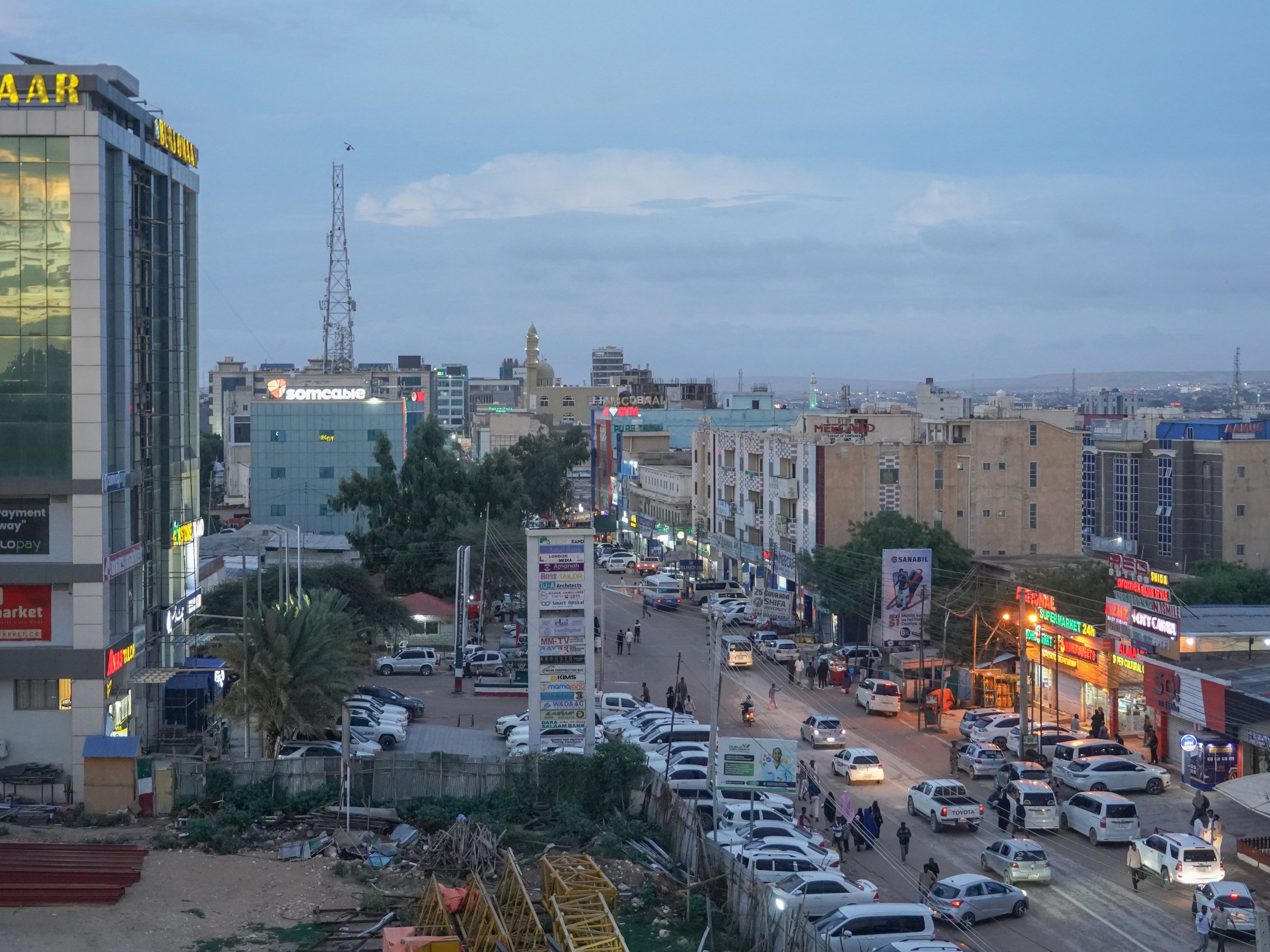
A convoy of tinted SUVs cuts through the dusty alleyways of Hargeisa, the capital of Somaliland, before disappearing behind the gates of the Ministry of Foreign Affairs. Clad in immaculate business suits, four Australian businessmen step out of the vehicles and make their way into the building with its green, white and red colonnades — the colours of the flag of this self-proclaimed state in western Somalia.
At the beginning of April, Foreign Minister Abdirahman Bakal welcomes his guests with a broad smile. “What are your impressions of the country?” he asks, taking his seat in a reception room reserved for visitors. “Very positive. It was important for us to come and see things on the ground. We’ll be conveying a positive message to our shareholders,” one of the Australians replies. “They can rest easy. Somaliland is a haven of peace and stability. It’s the safest place in the entire Horn of Africa,” the minister says.
The investors have travelled from Perth on behalf of the Australian mining company EAU Mining, which specialises in industrial minerals. Outside the ministry, the company’s chief executive, James Durrant, explains that he undertook the trip after Israel became, on 26 December 2025, the first country in the world to recognise Somaliland’s independence, proclaimed in 1991. “It’s a powerful signal, suggesting that Somaliland could soon enter the international stage. We are closely monitoring the signs of broader recognition and will take the plunge once they become sufficiently aligned,” he says before climbing back into the convoy.
“Somaliland’s time has finally come”
Somaliland’s authorities hope that Israel’s recognition will trigger a double ripple effect, both diplomatic and economic. More than three decades after seceding from Somalia following horrific massacres orchestrated by Mogadishu, “Somaliland’s time has finally come,” proclaims Mohamed Abdirahman, the foreign minister’s right-hand man. “It is time for the world to acknowledge that we have built a genuine nation and to recognise our right to self-determination.”
Other countries are indeed tempted to follow Tel Aviv’s lead, despite the principle of the inviolability of borders. Seeking access to the sea, Ethiopia came close in 2024 to concluding an agreement with Hargeisa over a 19-kilometre coastal strip on the Gulf of Aden, before backing down under pressure from Mogadishu. The United Arab Emirates, long involved in developing the major port of Berbera — where they also maintain a military base — are also following the matter closely.
But the cornerstone of broader recognition lies in Washington, where part of the Republican establishment is lobbying the White House on Somaliland’s behalf. The powerful Texas senator Ted Cruz, who is very close to Israel, is one of Hargeisa’s most vocal advocates. During a Senate meeting on 23 April, the politician stressed the “growing strategic relevance of Somaliland” and asserted that Donald Trump could recognise the self-proclaimed state before the end of his term. At the same time, a group of lawmakers in the House of Representatives introduced a bill in March instructing the Treasury Department to identify the legal obstacles preventing Somaliland from accessing the US financial system. In their sights is integration into the Swift international transfer network, which is essential for dollar-denominated transactions.
A five-star hotel inaugurated in August 2025
“Our banks cannot raise money on international markets, which condemns them to charging prohibitively high interest rates for local businesses. Access to the Swift system would, in that respect, be more decisive than diplomatic recognition,” notes Musa Dhaqaale, a Somaliland economist.
Drawn by the momentum, a handful of foreign companies travelled to Hargeisa last winter. Alongside EAU Mining, Malaysia’s offshore Golden Touch Investment Bank, which acts as an intermediary for Asian investors, visited in February. Two Israeli firms — VisiRight, which specialises in surveillance technologies, and Amore Capital, a consultancy — have also announced plans to establish themselves in Somaliland. Contacted for comment, Somaliland’s Ministry of Commerce says other foreign companies have expressed interest, without specifying either their identities or sectors of activity. The economic boom hoped for after Israeli recognition has yet to materialise.
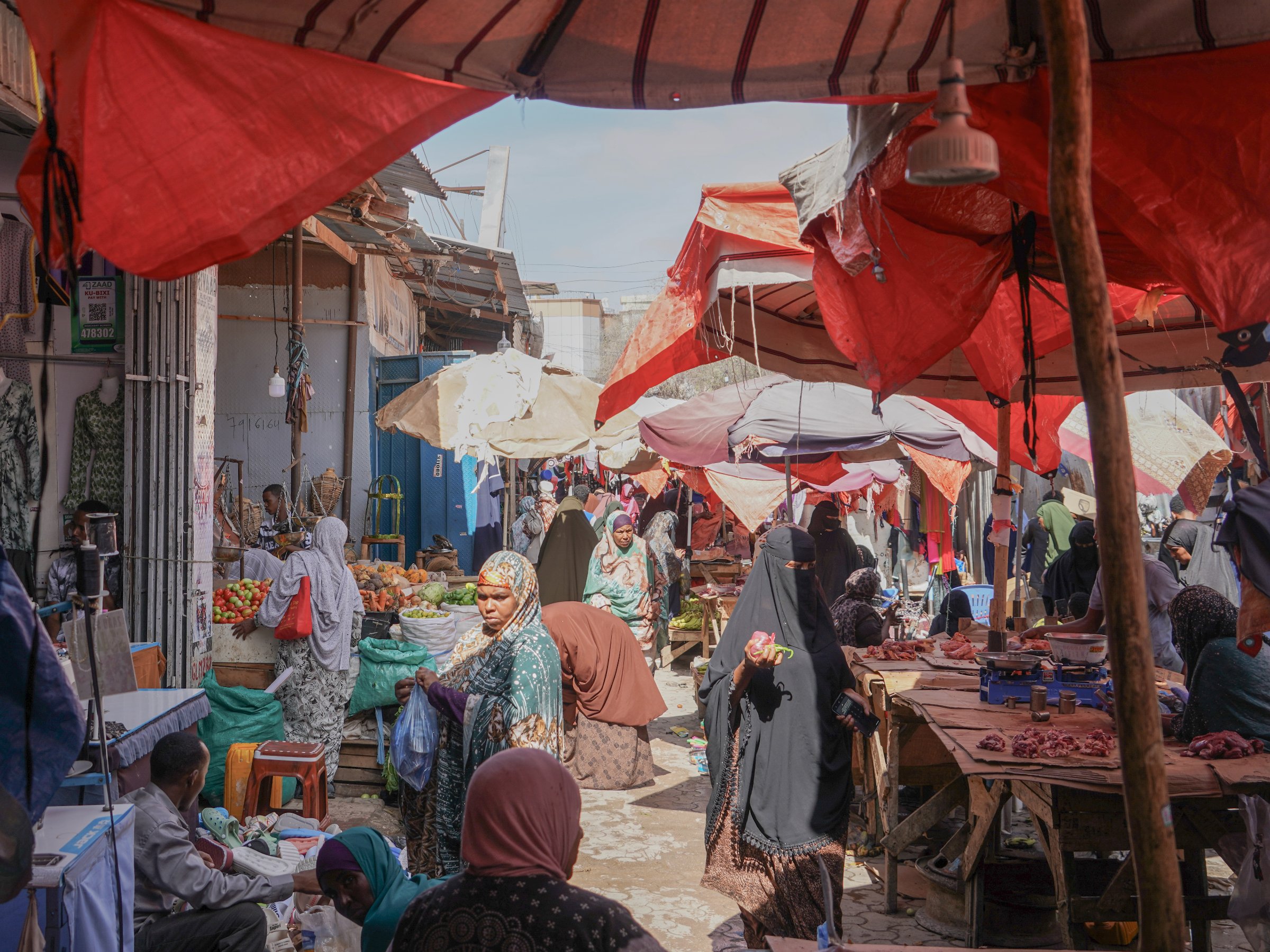
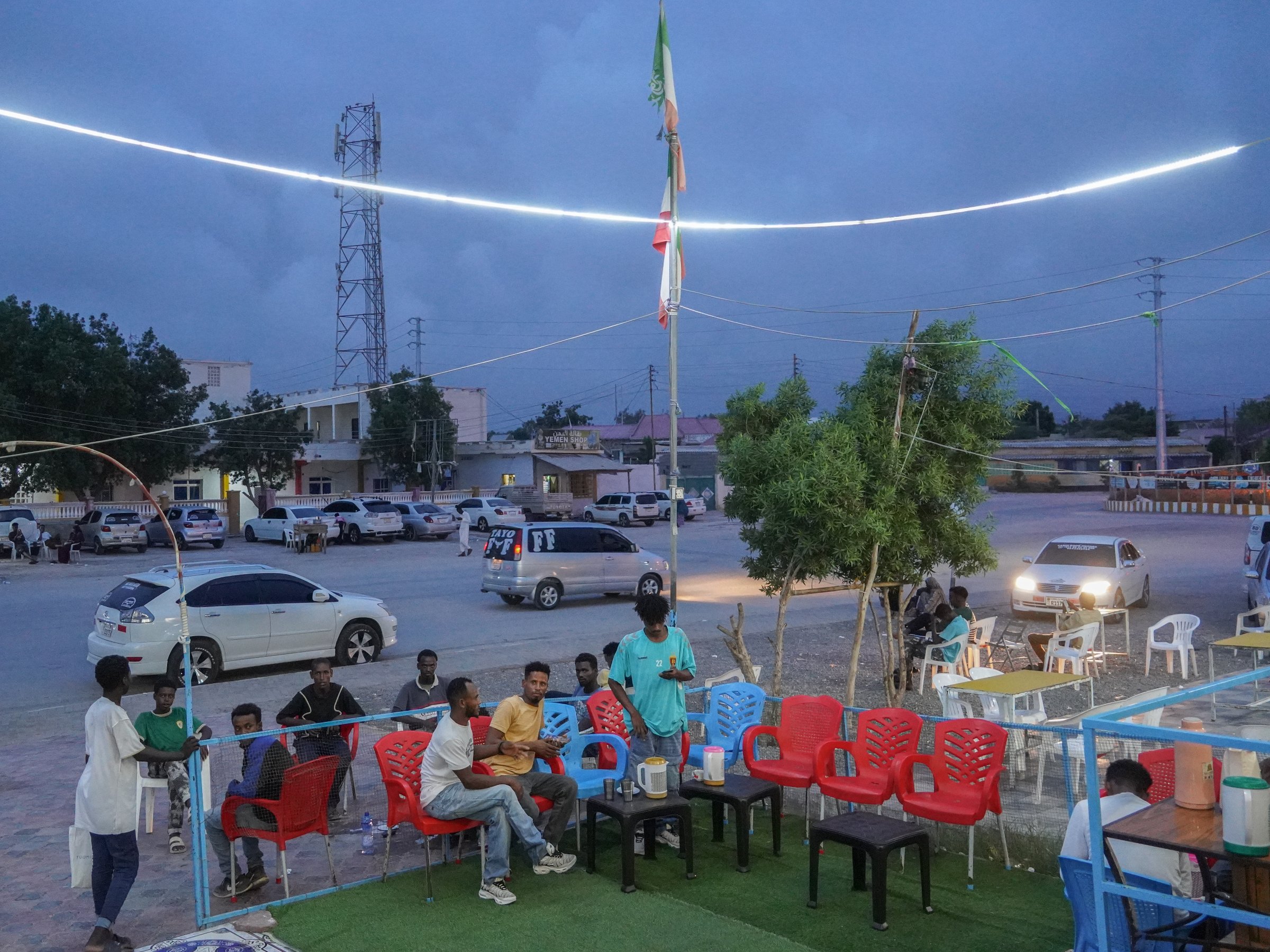
The potential, however, is there. Seen from the ground, Somaliland offers a surprisingly flattering business card for foreign investors. Hargeisa bears the hallmarks of a prosperous African city, with cafés animated by an elegant, connected youth. Here, female students take selfies to mark the opening of a Nutella waffle restaurant; there, a new steel-and-glass shopping centre is preparing to open its boutiques and travel agencies. Power cuts are rare, the streets well maintained and the markets well stocked. Its airport offers direct connections to major regional hubs such as Dubai, Jeddah and Addis Ababa. Towering above it all, the country’s first five-star hotel, inaugurated in the summer of 2025, stands atop a hill.
“We are a functioning democracy”
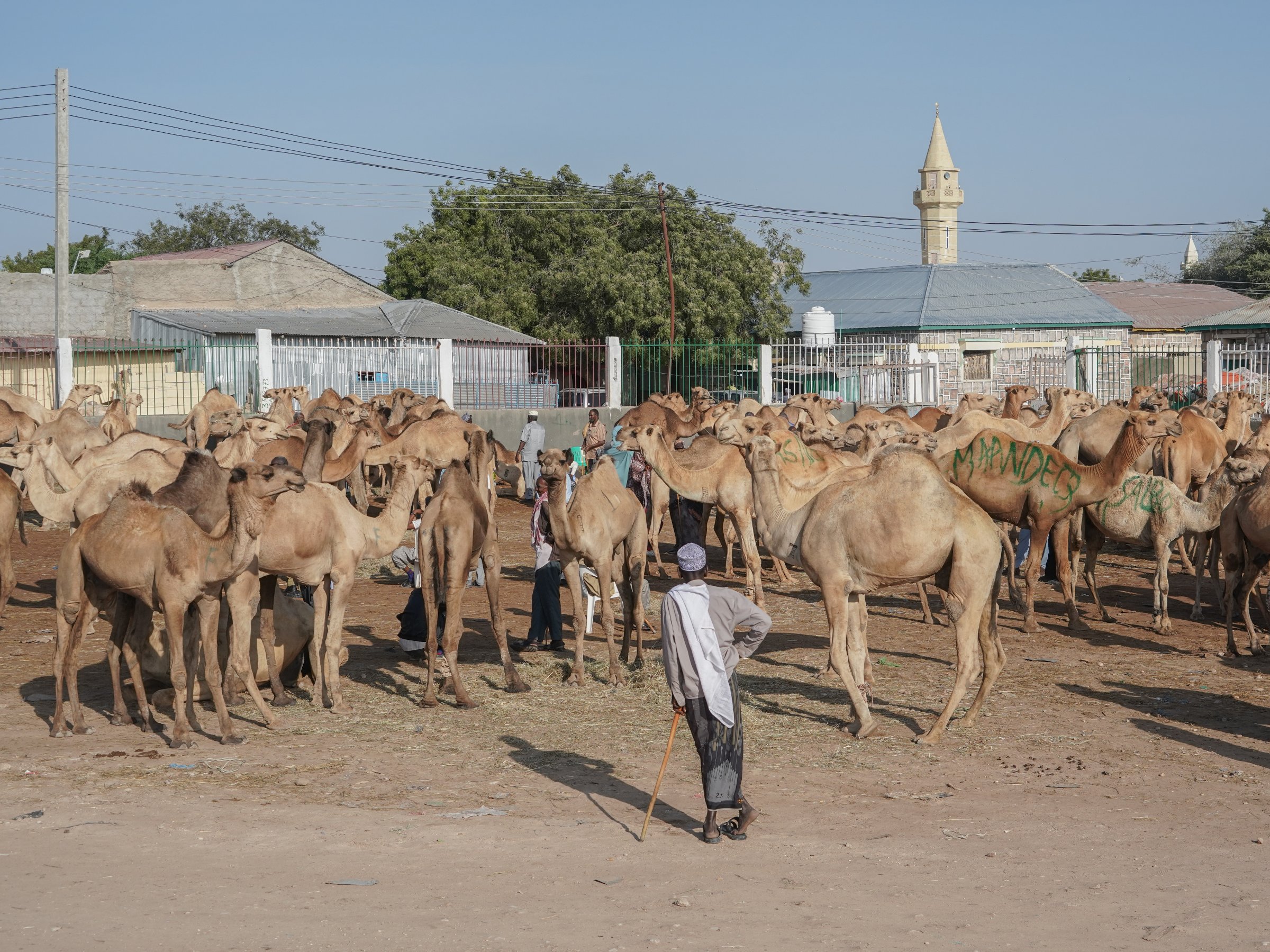
At the end of a flawless ribbon of asphalt, around 150 kilometres to the north, rises the port of Berbera and its three ultra-modern quay cranes. Built by DP World, the terminal ultimately aims to compete with Djibouti in supplying Ethiopia, the demographic giant of the region. Beyond the greenery of the Golis mountain range, the high plateau of the Burao region reveals a pastoral landscape: a patchwork of semi-arid expanses dotted with pale specks of goat, camel and cattle herds. Pending the expansion of the Berbera–Addis Ababa corridor, the economy remains heavily dependent on livestock exports to the Arabian Peninsula, as well as remittances from the diaspora.
-
 The camel market in Hargeisa (April 2026).Theophile Simon
 -
 Aerial view of the port of Berbera, in western Somalia, built by the Emirati company DP World.Theophile Simon
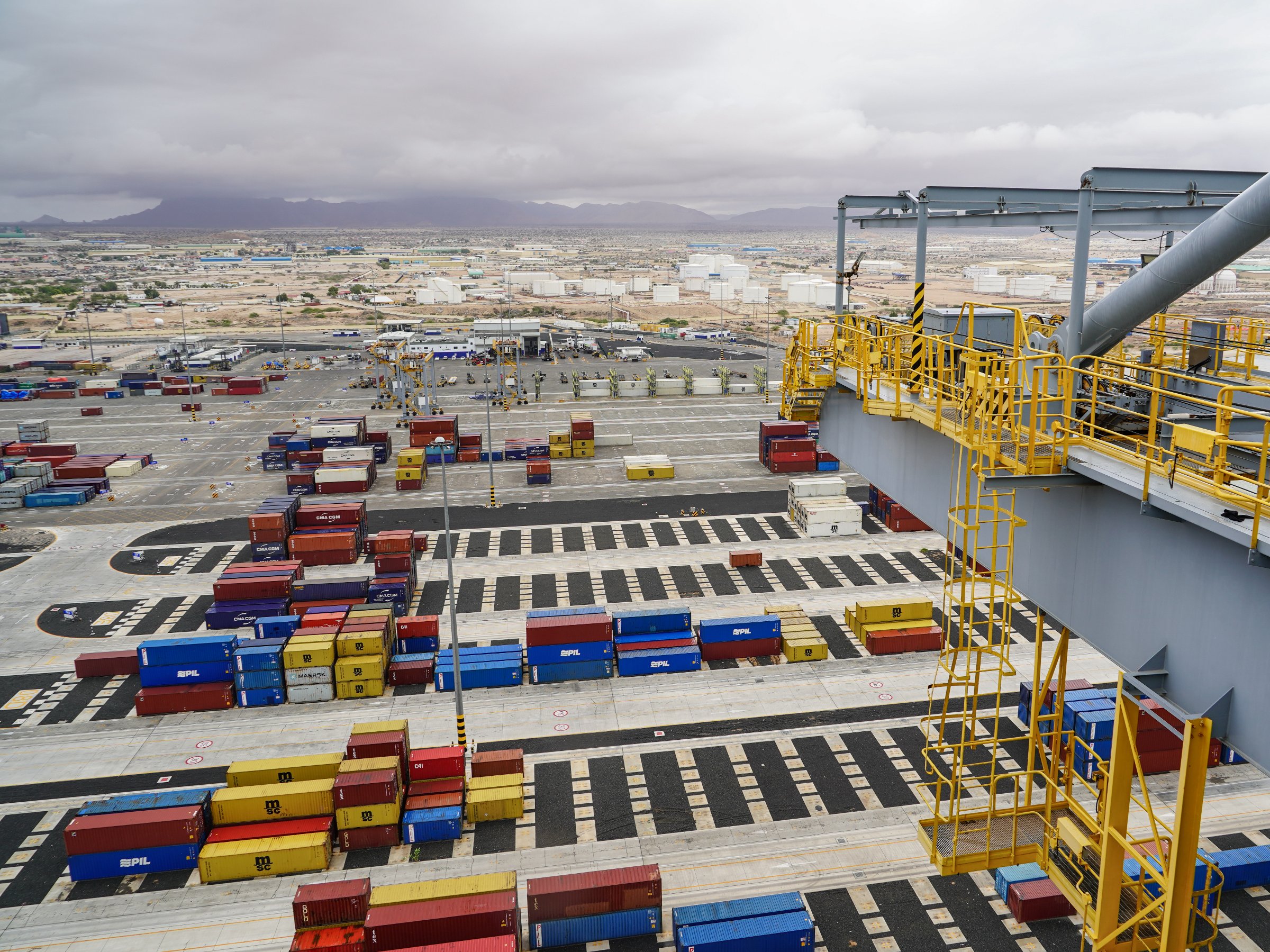
Yet despite lacking international recognition and meaningful access to development aid, Somaliland’s GDP per capita is around 50 per cent higher than that of the rest of Somalia, while its poverty rate is roughly half as high. Above all, it has managed to build a political system that is both stable and democratic, despite persistent tensions between the Isaaq clan, dominant demographically and territorially, and the other major groups — the Dir in the west and the Darod in the east.
“We are a functioning democracy, the most advanced in the entire region. Since the secession of 1991, we have held six presidential elections and witnessed six peaceful transfers of power,” says lawyer Guleid Jama, a leading advocate for fundamental rights. He is not, however, naïve. “Our Constitution, dating from 2001, is relatively progressive. But our Penal Code still rests on the Mussolinian legacy of Italian colonialism, which regularly leads the police to obstruct the work of journalists and political opponents,” he continues.
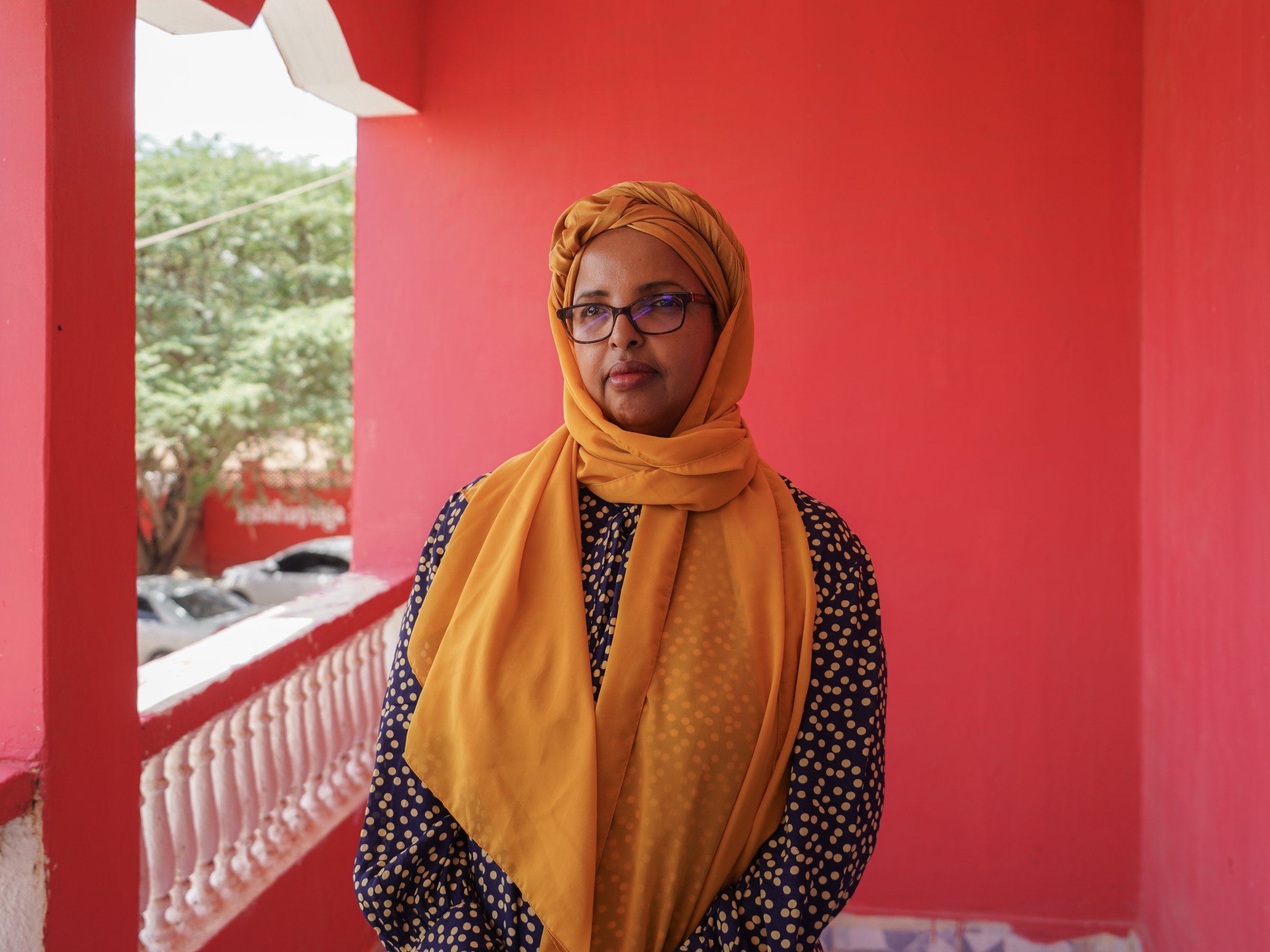
Marwo Sucaad, a figure within the opposition Kaah (“Harmony”) Alliance for Equality and Development party, agrees. “Our governments are democratically elected, without a shadow of a doubt. The 2024 campaign was dynamic, and turnout was high,” she says from the party headquarters, a bright red building tucked away in the suburbs of Hargeisa. “There is still progress to be made: corruption exists, and women remain largely excluded from power. But what democracy can truly claim to be perfect?”
“Israel wants to establish a forward operating post here”
Could Israel’s arrival in the Horn of Africa jeopardise these advances? The recognition of the Jewish state, welcomed with scenes of jubilation in the streets of Hargeisa, appears to be a double-edged sword. Barely two months later, Tel Aviv entered into conflict with Iran, the effects of which threaten to spread as far as the Red Sea and the Gulf of Aden.
On the set of Somaliland’s leading television channel, MMTV, debates are now tinged with anxiety. “Now that we are allied with Israel, could the war reach us here?” journalist Suleiman Sahanzao asked in early April during an interview with Abdirisak Ali, a Somaliland political scientist who spent most of his career in the Gulf. “We have nothing to fear from this conflict. Since the attacks of 7 October 2023, Israel has gained the upper hand over its enemies to the point of becoming the dominant power in the Middle East. This alliance will allow us to develop, much like Saudi Arabia benefited from US protection after the Second World War,” the expert replied confidently.
Attention is turning to Berbera, where Israel is reportedly considering establishing a forward operating post to monitor the Bab el-Mandeb Strait and the Houthis in Yemen. The project has been confirmed neither by Tel Aviv nor Hargeisa, but on 12 March Bloomberg reported that Israeli officials had already conducted reconnaissance missions along a coastal area west of Berbera that could host a military “base or facility”. A Somaliland minister also told the outlet that Hargeisa would “certainly conduct an assessment” regarding the possibility of hosting such an Israeli presence.
Questioned at the end of March, Mohamed Abdirahman from the Foreign Ministry accused Bloomberg of having “lacked clarity”, without denying the report. “We are still at the stage of establishing diplomatic contacts,” he merely replied on the sidelines of the Australians’ visit. A source very close to the circles of power was more direct. “It’s an open secret: Israel wants to establish a forward operating post here. But in the current context of crisis in the Middle East, the government cannot yet openly admit it. Our ministers, unused to having foreign journalists turn up in their offices, got ahead of themselves a little,” he said on condition of anonymity.
“We are on the brink of another war”
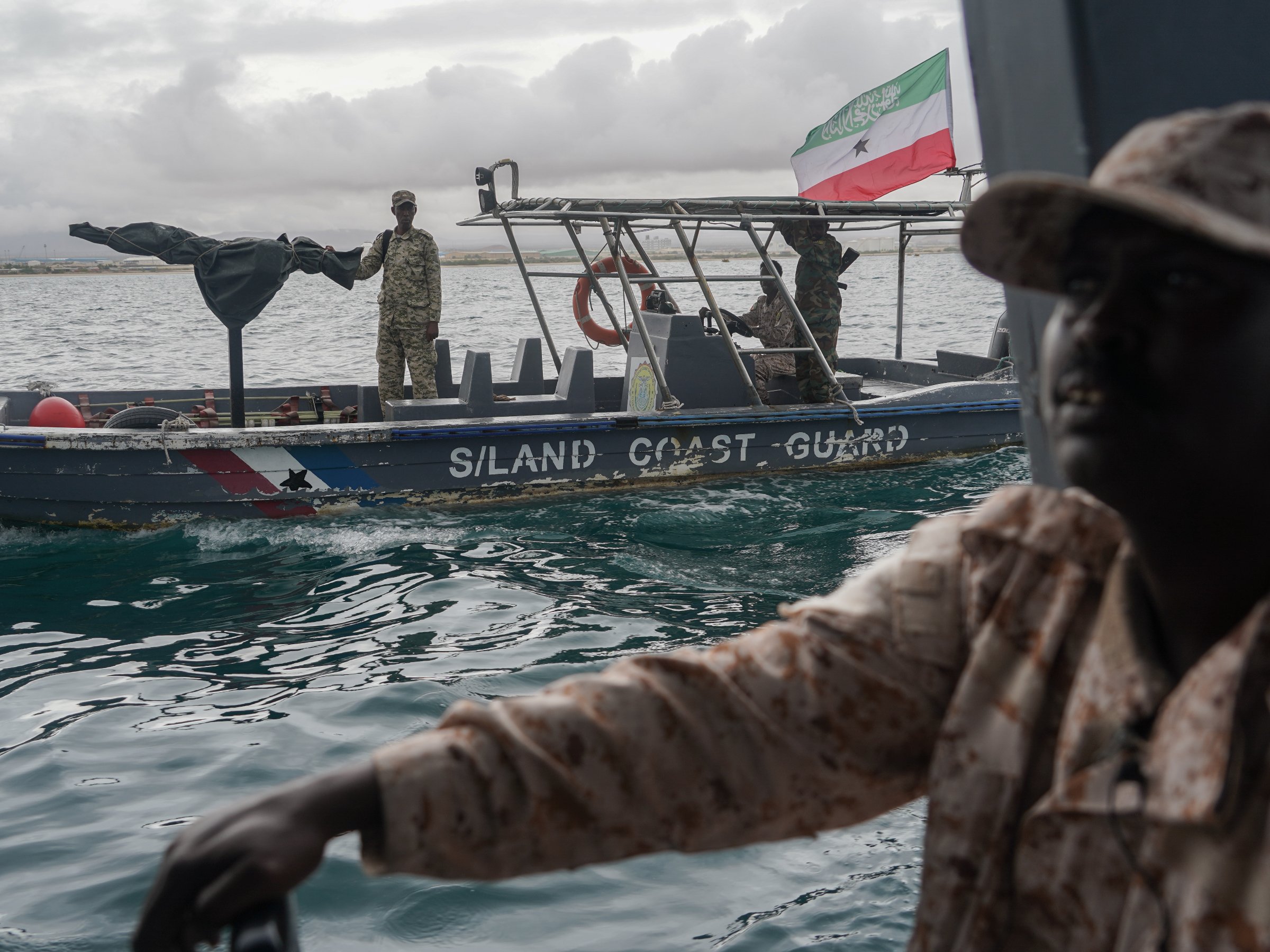
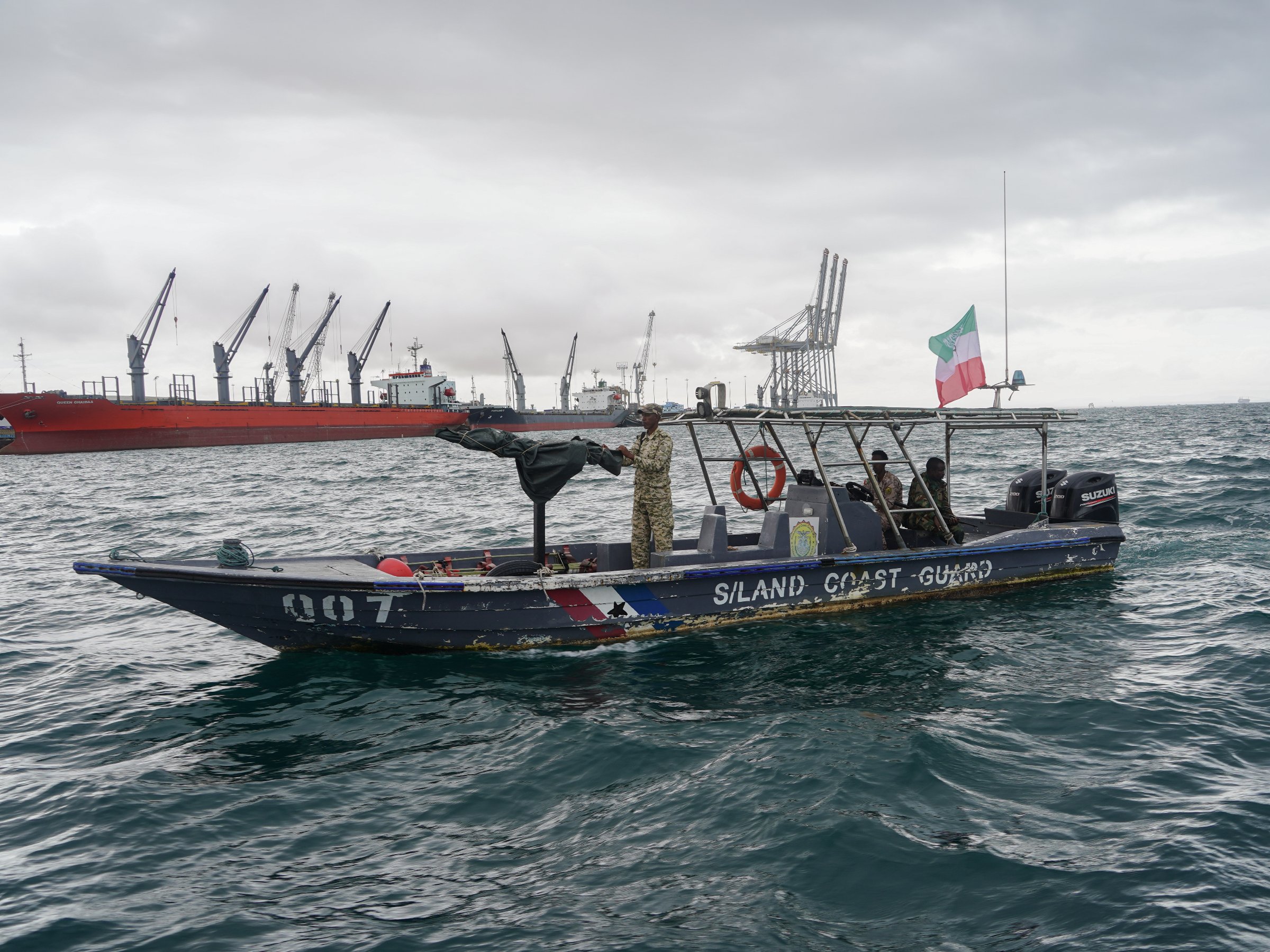
In Yemen, the Houthis declared as early as 28 December that Berbera had become a “legitimate target”. It is a threat that Hargeisa has little capacity to deter. Its army, mainly equipped with tanks and rocket launchers seized from Mogadishu at the end of the civil war in the 1980s, has no air defence capabilities. “Somaliland is preparing for this kind of situation. Our generals are working day and night to guarantee the country’s security,” Mohamed Abdirahman nevertheless insists.
-
 Left and right: Somaliland Coast Guard vessels at the entrance to the port of Berbera (April 2026).Theophile Simon
 -
 With limited resources, these teams must monitor nearly 1,000 km of coastline facing Yemen (April 2026).Theophile Simon
For Marwo Sucaad of the Kaah party, the real danger lies in a resurgence of the simmering conflict with Mogadishu. “The eastern region remains disputed. Somalia, which enjoys the support of the Turks, the Chinese, the Egyptians and the Saudis, could resume hostilities in retaliation for Israeli recognition. We are on the brink of another war,” the politician warns, recalling that the jihadists of Al-Shabaab announced on 27 December that they would “fight” any Israeli attempt to “use” Somaliland.
Somaliland’s “haven of peace” will need more than recognition from Tel Aviv to take off. “Only Washington can keep Somalia’s backers in line. That is therefore the only protection that matters,” concludes Marwo Sucaad. Somaliland’s government appears to share this analysis. Far less evasive on the American question than on the Israeli file, it told AFP at the end of February that it was prepared to offer the United States “exclusive access” to its mineral resources, as well as access to “military bases”. Emissaries from the US military visited Hargeisa and Berbera in June and again in November 2025. Nothing, however, suggests that Washington is eager to deploy troops there, given that the United States already maintains a base in Djibouti and cooperates with Mogadishu in counterterrorism operations.
A cruel lack of funding
Somaliland’s subsoil is believed to contain oil, gas, lithium, rare earths and various metals. Several foreign companies have already positioned themselves accordingly: the British firm Genel Energy has been prospecting for hydrocarbons since 2012; Taiwan’s Chang Development Company and Saudi Arabia’s Kilomass are interested in lithium. EAU Mining may soon follow suit. Yet beyond these geological indications, few deposits have, at this stage, been formally confirmed.
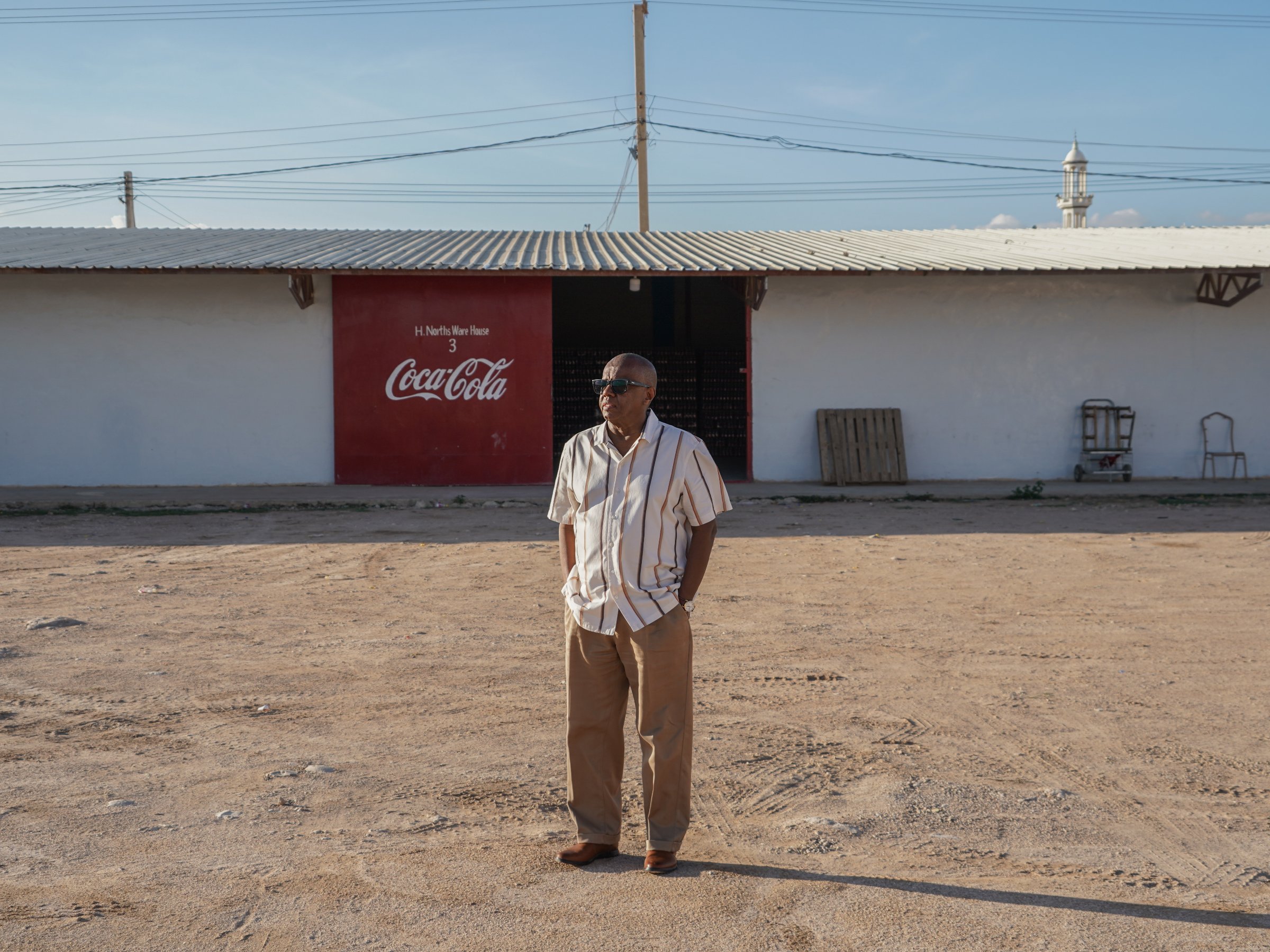
Businessman Ahmed Guelleh, founder of the country’s largest food-processing factory, urges Somaliland not to place all its hopes in international recognition and the mining sector. “That is not how we will create the thousands of industrial jobs our youth need,” he says emphatically from a warehouse stacked with pallets of Coca-Cola bottled in his factory north of Hargeisa. “We need to direct our efforts towards manufacturing, technology and agriculture. Once that economic foundation is in place, international recognition will follow naturally.”
But Somaliland starts with serious handicaps in these areas: energy is extremely expensive because it is entirely generated from fuel oil, the workforce is poorly trained and access to water is constrained by the arid climate. In February, twenty-five Somaliland engineers travelled to Israel to train in irrigation techniques. They returned both impressed and discouraged. “Their infrastructure is remarkable, but we do not have the first penny needed to reproduce that model,” laments an engineer from the Ministry of Water, whose annual budget amounts to just under €2 million. In a territory facing heavy structural constraints, recognition alone will not be enough to remove the obstacles to development.
