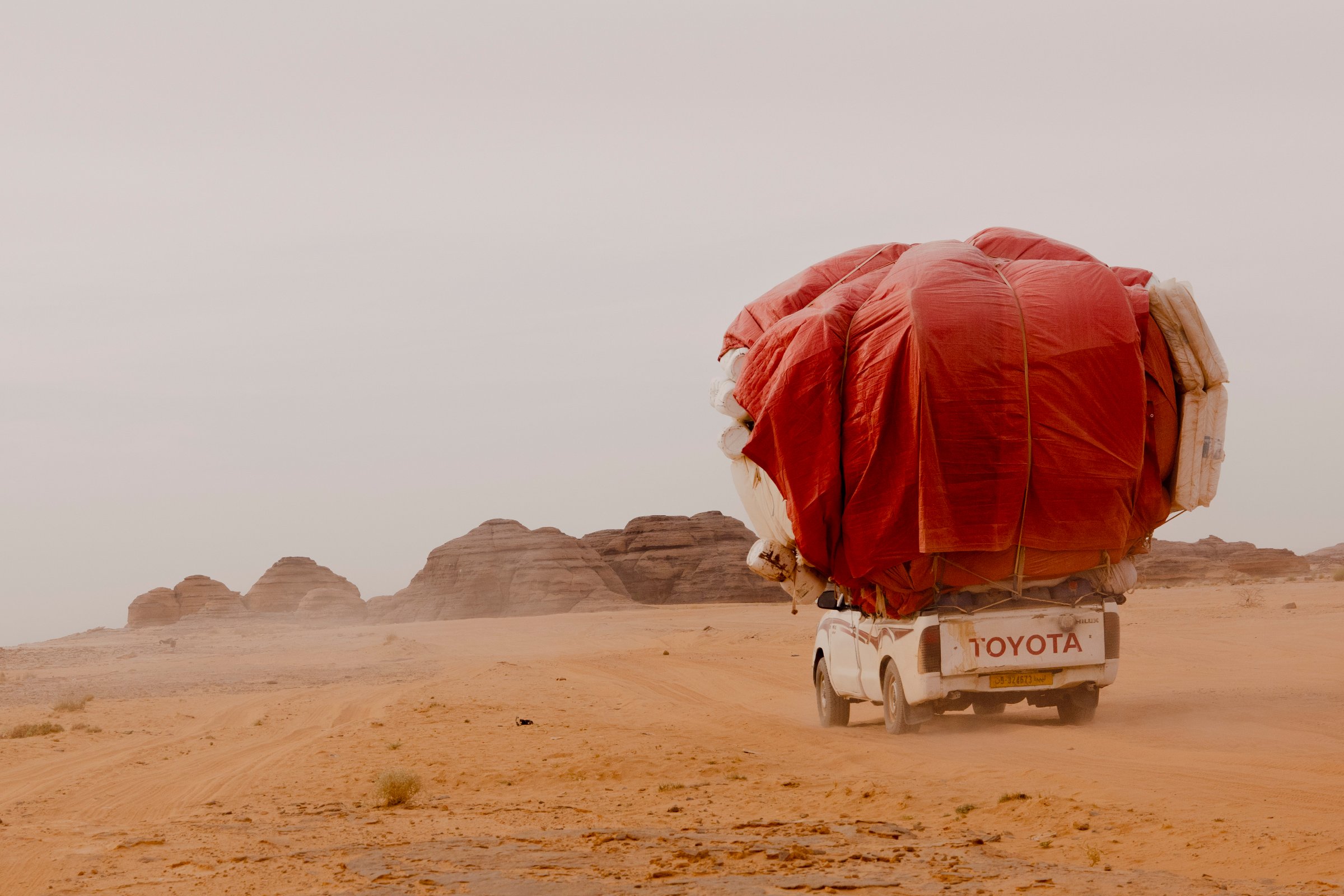
Mahamat Nour Youssoufa is 42 years old and wears a long, clay-colored wool coat. From Kanem, a region in central Chad where he was born and raised, he headed north in 2013 when he heard about the discovery of gold. It was the time of the great rush; the Tibesti mountains became the must-go destination for an entire generation of unemployed youth. The gold is alluvial—just a metal detector and a bit of savings are enough to survive independently for several days in the desert. With four friends, all in their late twenties, Mahamat Nour Youssouf set off at full speed.
We meet twelve years later in Zouar, at the end of December 2025. He says he hasn’t changed much. He runs a hand over his moustache, adjusts his turban. Gold? He has moved on. For nine years, he dug at the bottom of a shaft in Kouri Bougoudi before turning his back on it, deciding that life was worth more than a collapse. “There were many dangers—on the Chadian side, the Libyan side, the Nigerien side—too many problems, too many worries…” he says.
So he left the pits behind and turned to trade—anything his single-cab Hilux can carry, those pickup trucks nicknamed “Talibans” in this part of the desert. But his specialty is fuel, one of the most lucrative trades.
Like all those interviewed for this investigation, the transporter describes the geographical triangle between Niger, Libya and Chad as an informal trading space, a network of back routes along which goods and people circulate. The populations living on either side of these vast borders have known the tracks and secondary routes since time immemorial.
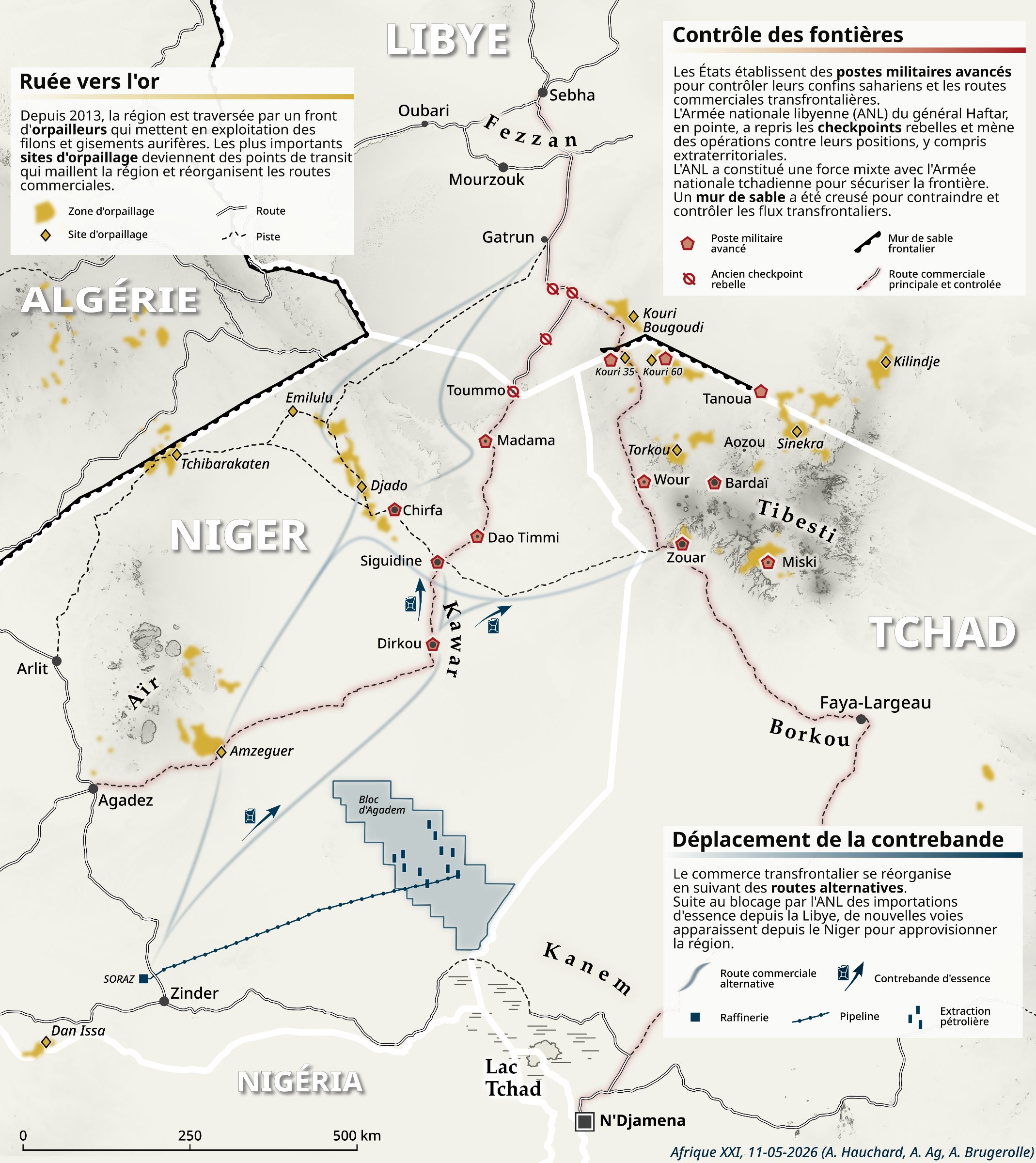
Mahamat Nour Youssouf explains: “We used to go up to Sebha [in Libya], buy goods there, then head back down to Tibesti [in Chad]. It was as simple as that. Sometimes we went to Niger, to Dirkou or Chirfa, and then came back. It also depended on taxes, customs clearance, and the various checkpoints. But it brings in more than gold, that’s for sure,” he says.
Southern Libya has long suffered from relatively weak control by both the official authorities in Tripoli and the parallel authorities in Benghazi, and has always been a place for the informal export of fuel to Niger and Chad. But everything has changed over the past year, Mahamat Nour Youssouf says: geopolitical balances are no longer what they used to be.
“Haftar’s grip is tightening”
Control by the forces of the Libyan National Army (LNA) under General Khalifa Haftar is stronger today than it was before, all interviewees report. “Haftar’s grip is tightening,” confirms a traditional Chadian leader.
“Now it’s Haftar’s men who control the checkpoints. There are no longer, as before, as many Nigerien or Chadian rebels on the Libyan side of the border,” explains Abdoul Kader, a former member of the Patriotic Front for Liberation (FPL), an armed group created after the 2023 coup in Niger to fight the military regime in Niamey.
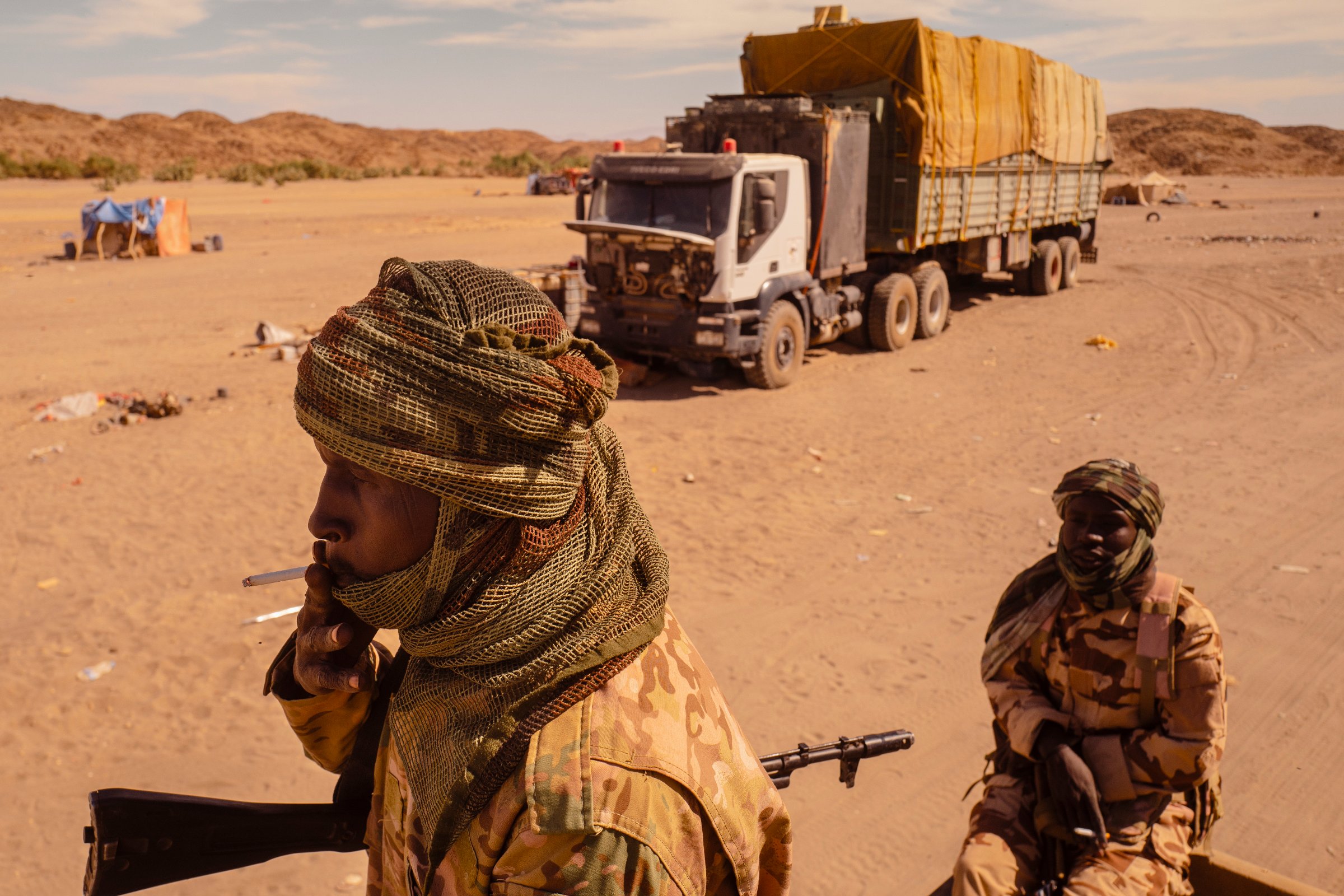
“Before, we were stationed about 150 kilometres north of Kouri Bougoudi, at ‘Passage Y’. At the checkpoint there were fighters from FACT [the Front for Change and Concord in Chad, created by Mahamat Mahadi Ali, which was behind the death of President Idriss Déby Itno in 2021] and the FPL. We held the checkpoint together—it was a mandatory crossing point for all trucks heading to Niger or Chad,” Abdoul Kader recalls. “Traders, especially those transporting fuel, paid a toll, and we used the funds to pay part of our fighters’ salaries.”
These checkpoints are informal control posts set up along paved roads, often staffed by several armed men, a small hut, and a taxation system whose rates vary according to the mood of the day. They have gradually been dismantled in favour of official LNA checkpoints.
“Checkpoints have been set up by the LNA between Sebha, Gatrun and the Chadian border. At each one, you pay—it’s very expensive now. The Libyan authorities [the LNA] have also put a stop to exports to neighbouring countries, so fuel prices have surged in Chad and Niger,” says Ali Akhlit Khadra, a Chadian trader accustomed to travelling between Zouar and Sebha.
The Benghazi authorities allow foodstuffs through but now prohibit the informal trade in fuel to Chad and Niger. So how can fuel be obtained? Although Chad, Niger and Libya are all oil-producing countries, petrol and diesel are in critically short supply in their northern regions.
Smuggled fuel from Niger
On the informal highways of the Sahara, one can see pickup trucks every day loaded with dozens of jerrycans of fuel stacked in pyramids and tied down with rope. They sometimes travel thousands of kilometres in search of a higher resale price. In Kouri Bougoudi, at the end of 2025, a litre of petrol sold for 2,000 CFA francs—around three euros.
“It’s Niger that has taken over fuel supply at the moment,” says a Nigerien researcher who requested anonymity.
Five different sources told Afrique XXI that tankers have in recent months brought fuel into northern Niger, notably to Chirfa and Dirkou. Two supply routes exist: one official, via the Nigerien Petroleum Company (Sonidep), which supplies Dirkou’s stations from Agadez under military escort; the other unofficial, via tankers from the Zinder refinery (Soraz), partly owned by the China National Petroleum Corporation (CNPC), which, unable to export its oil to Benin, sells it in the desert.
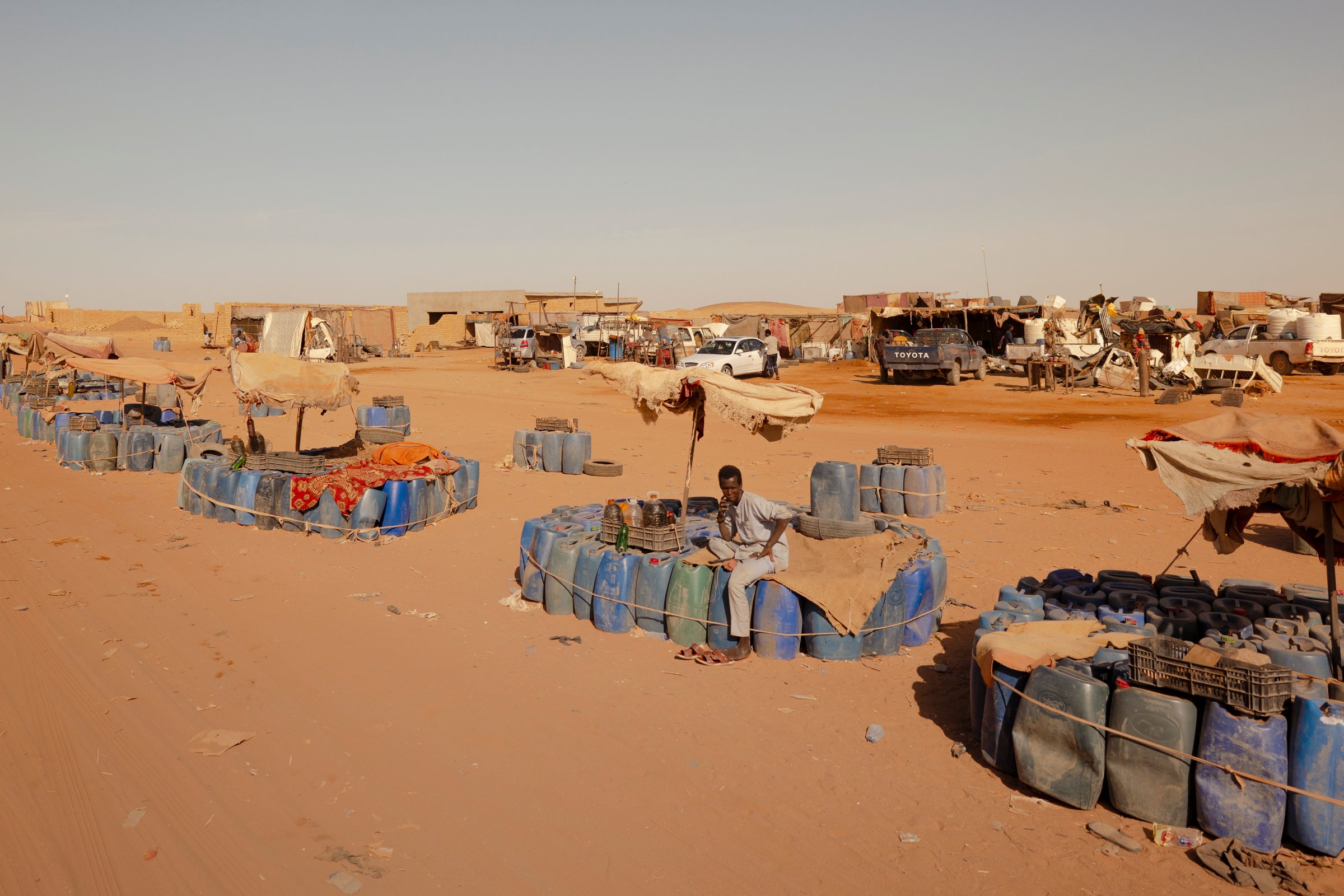
“Here, fuel is sold on a first-come, first-served basis. One tanker has to empty before another can take its place. To buy fuel from the tankers, you must have either a drum or five 60-litre jerrycans,” says a witness in Chirfa in early 2026, describing this illegal trade.
In addition to this tightening on the Libyan side, a joint force has been established between the Chadian army and General Haftar’s forces to better control the border between the two countries. Its commander was installed at the end of February at the gold-mining site of Kouri Bougoudi. According to Chadian state television, twenty-two vehicles were supplied by Libya and “logistical support” by Chad.
“Trenches on the Chadian side of the border”
On the Chadian side, alongside this joint force, the army has deployed several special operations (OPS) in the Tibesti region, ensuring relatively strong territorial control: bases have been set up since 2022 in Tanoua, Miski, Wour, Kouri 35, and Kouri 60, in addition to existing units in the region’s two main towns, Zouar and Bardaï.
An elite Chadian officer, deployed for three and a half years in Kouri Bougoudi, explains: “Now we’ve dug trenches along the border on the Chadian side, we’ve deployed OPS in all sensitive areas of Tibesti, and the only place without our men along the Libyan border is where there are mines near Aozou—but it’s impossible to pass there,” he says.
“Before, with Toyotas, smugglers crossed the border at night, whether for trafficking or kidnapping people for their gold. But it must be said that since the president’s visit [Mahamat Idriss Déby] in 2023 and the implementation of OPS led by General Allifa (Weddeye, now governor of Tibesti), things have improved significantly,” he adds.
When Afrique XXI asks this officer about the continued existence of smugglers between the three countries, he replies: “These are the habits of the desert. There are checkpoints, customs, but some get through, some don’t. Of course smuggling exists—it always has.”
An “intelligent policy” to encourage trade
A former customs officer on the Libya–Chad border explains: “When you live in northern Niger or northern Chad, it’s easier to go and buy goods in Libya than in Niamey or N’Djamena, and there’s an entire ecosystem specific to this region.”
He prefers to remain anonymous—let’s call him Mr X. He describes a commercial system unique to Tibesti. “For each type of goods, sometimes you can clear only 50% at the border to encourage trade,” he says.
-
 View of the market in Zouar, in the Tibesti region (northern Chad).
 -
 A cigarette vendor at the Zouar market (northern Chad). Manufactured in Dubai, the cigarettes are transported by truck across the desert between Libya and Chad.
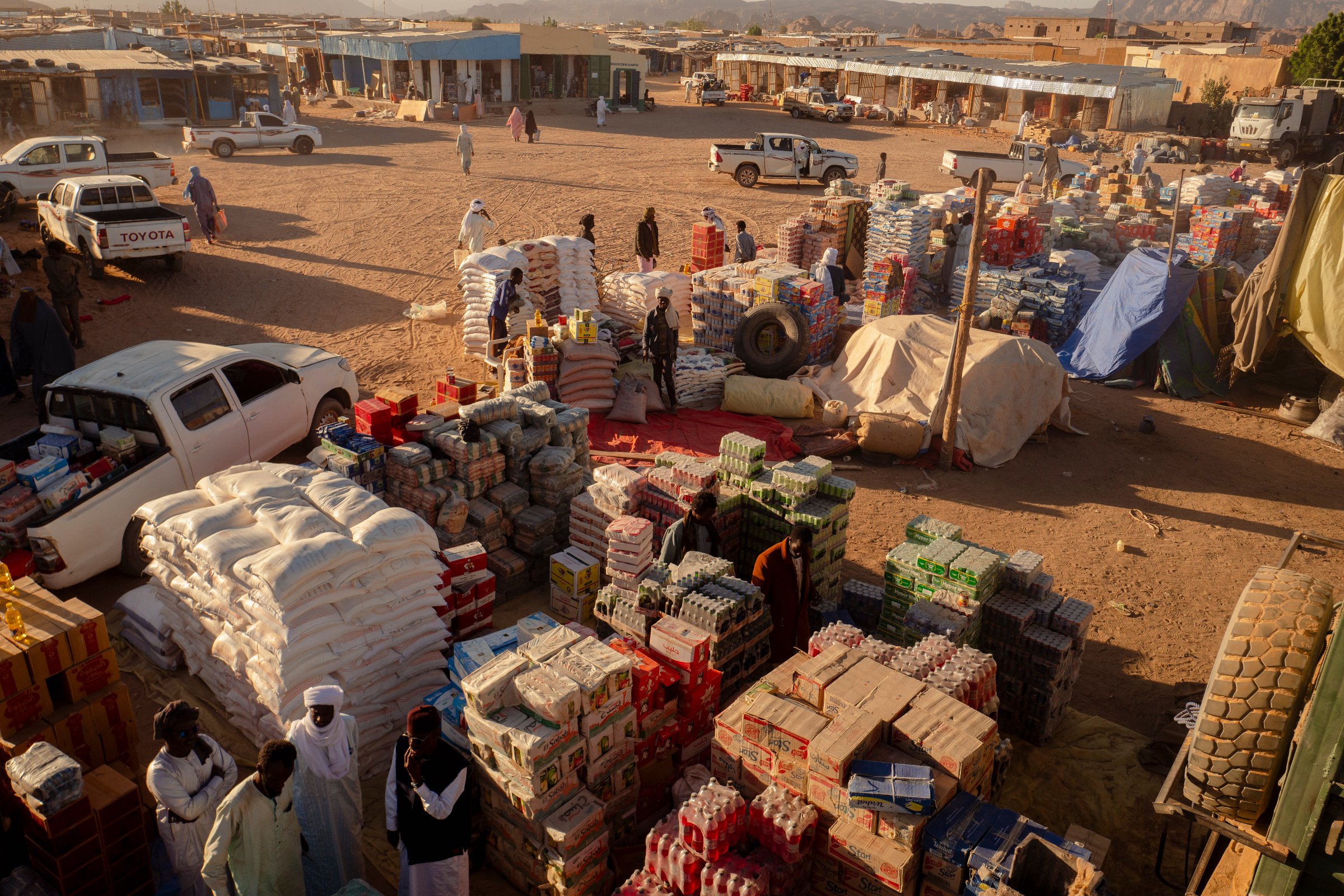
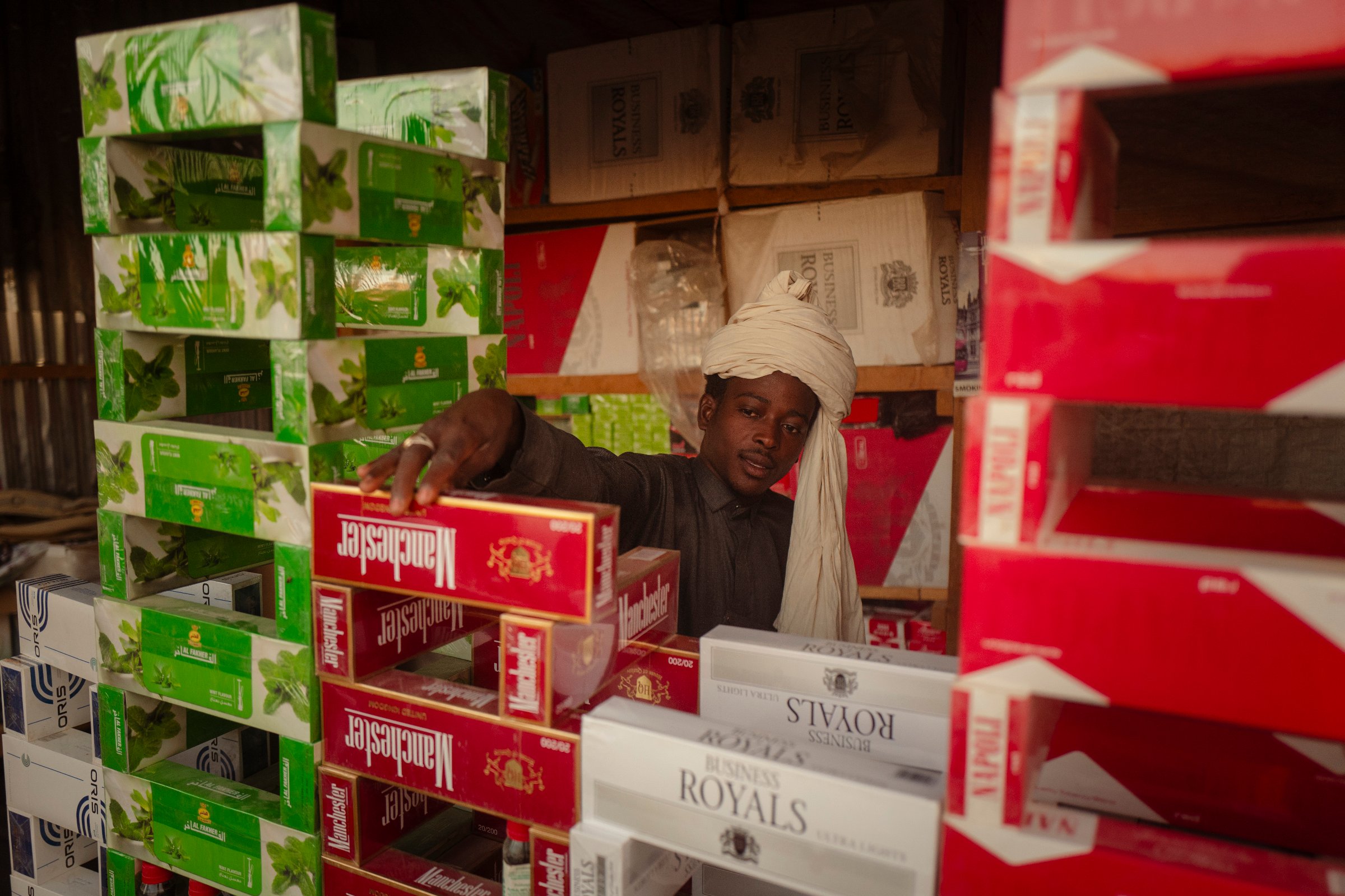
At the Kouri Bougoudi border post—the main commercial crossing between north-western Chad and Libya—negotiations have taken place between Chadian customs authorities and Libyan and Chadian traders’ unions to establish what Mr X calls an “intelligent policy” to encourage trade and reduce smuggling.
The case of cigarettes is telling. “In mid-2025, we agreed on lower customs duties per shipment of cigarettes. It varies, but to give an idea, at one point we went from 75,000 francs to 25,000 francs in taxes per carton. Before, traders preferred smuggling to declaring goods at customs. With this system, everyone wins: they no longer need to take bypass routes, and the state collects tax revenue,” the former customs officer says.
“There are armed groups and abusive taxation”
“On cigarettes alone, we made tens of millions of francs in tax revenue in just a few weeks after these negotiations—money we were completely missing out on before,” he adds. “People in N’Djamena and abroad say we’re smuggling or trafficking, but it’s just trade,” says Mahamat Nour Youssouf.
On the Nigerien side, however, the situation has deteriorated. A transporter used to travelling to Libya says that “transporting goods to Niger has become very dangerous for two reasons: on the Libyan side, Haftar’s men seize any fuel shipments destined for Kawar [in Niger], and in Niger there are armed groups and abusive taxation.”
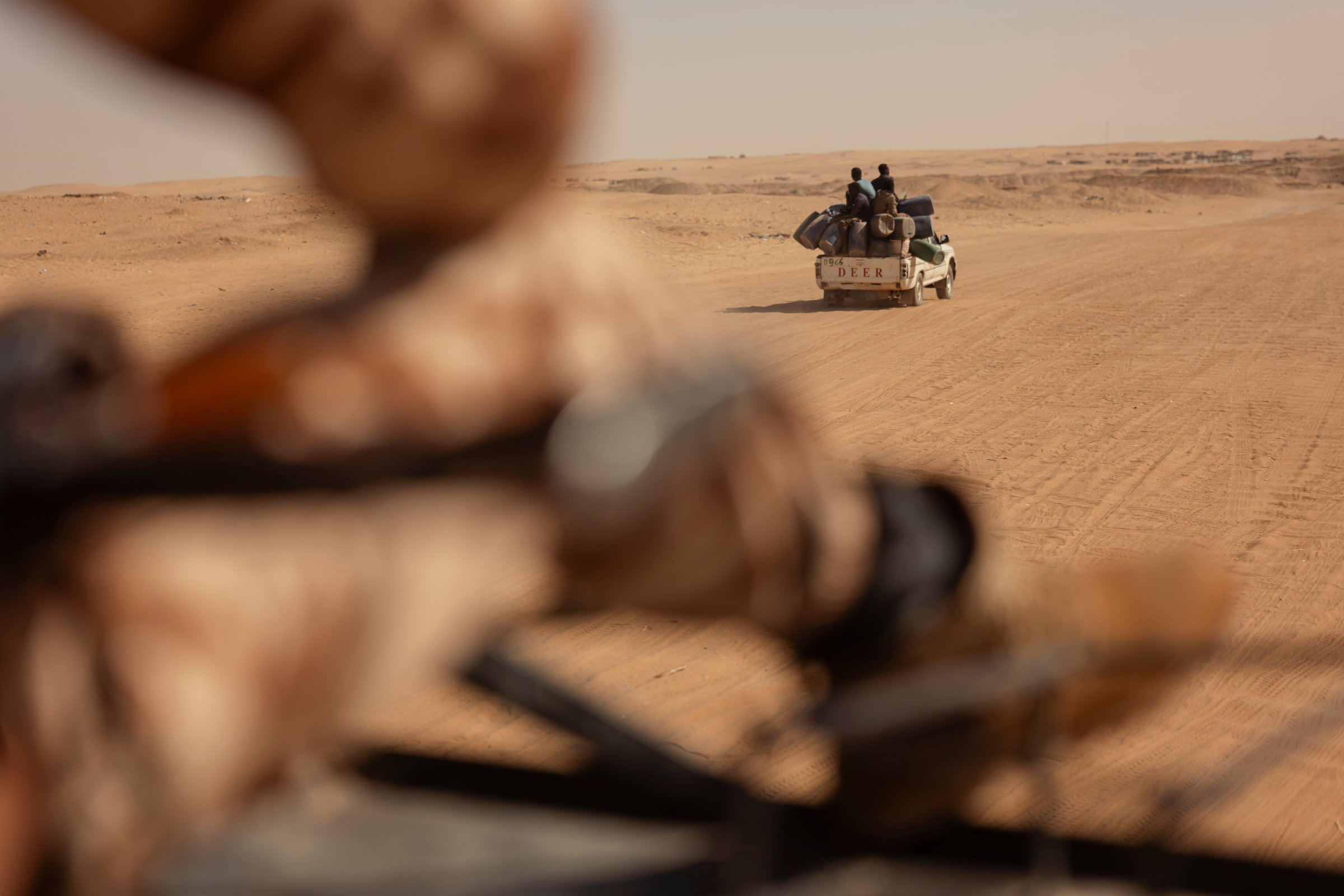
Today, south-western Libya and north-western Chad are relatively controlled by the forces present—the LNA and the Chadian army—but north-eastern Niger, by contrast, “has become the no-man’s-land that south-western Libya was ten years ago,” Mr X summarises.
The Nigerien army patrols the area but cannot cover the entire Agadez region—over 650,000 square kilometres, roughly the size of Afghanistan—even though it has checkpoints along the road linking Agadez to the border (Dao Timmi, Madama, Seguidine, Dirkou, Chirfa).
A proliferation of rebels
In such a largely desert area, armed robbery is a constant risk. On 21 January, four armed Zaghawa attacked a Toubou fuel transporter in the Djado gold zone. The man was killed, his fuel stolen, and his vehicle destroyed with a rocket launcher.
On the 22nd, according to several local sources, gold mine operators in Djado formed a “pursuit committee” to hunt down the attackers. They were located at Tefiyan 140, a mining site, and killed by the committee members, who posted photos of the bodies on social media.
Several rebel groups from all three countries now have rear bases in north-eastern Niger, according to officials from each: the CCMSR (Chadian), FACT (Chadian), MPLJ (Nigerien), and the “Revolutionaries of the South” (Libyan). Some collaborate occasionally on armed actions—for example, CCMSR fighters have been hired by other militias, according to one member interviewed. Others allow their fighters to work at the Djado mining sites.
Several factors explain this redeployment to Niger. According to a Chadian CCMSR rebel, “before, we could work with Haftar’s men in southern Libya, but now it’s complicated.” Others point to stronger territorial control by the LNA and the Chadian army in their respective regions.
Kidnappings and assassinations
One of these groups has been particularly active in recent weeks: the “Revolutionaries of the South,” led by Mahamat Wardougou, known as Kochi. According to one of its commanders, this Tripoli-backed group—composed mainly of Teda fighters—has imposed a blockade on smuggling routes for fuel, weapons and drugs between Libya, Niger and Chad.
At the end of January, it kidnapped around ten LNA fighters. On 22 February, it claimed responsibility for the assassination of an LNA officer in Gatrun. In the days that followed, the LNA, supported by the Chad–Libya joint force, launched an offensive against Wardougou’s fighters on the Nigerien side of the border.
According to multiple sources, clashes began along the Niger–Libya border on the night of 24–25 February and extended up to 130 kilometres into Nigerien territory, particularly in the Emilulu area. A counteroffensive by the rebels followed, with further fighting on 26 and 27 February.
“It was a joint base of the CCMSR and the Revolutionaries of the South that was attacked and destroyed by Haftar’s men, supported by Chadian soldiers. They arrested several CCMSR fighters and Hassan Wardougou, the brother of our commander-in-chief Mahamat Wardougou,” explains a senior member of the Revolutionaries of the South.
In an already weakly controlled area, these clashes are alarming. “It’s true that Haftar has more resources than the Revolutionaries of the South, but he won’t win this war easily because Wardougou knows the terrain and controls smuggling in this part of the Sahara,” says a former Nigerien rebel.
“Already, the Revolutionaries of the South are supported by the Tripoli government—perhaps even by Algeria—and by many Toubous from Libya, Niger and Chad,” he continues. “This war will create serious security problems.”
